
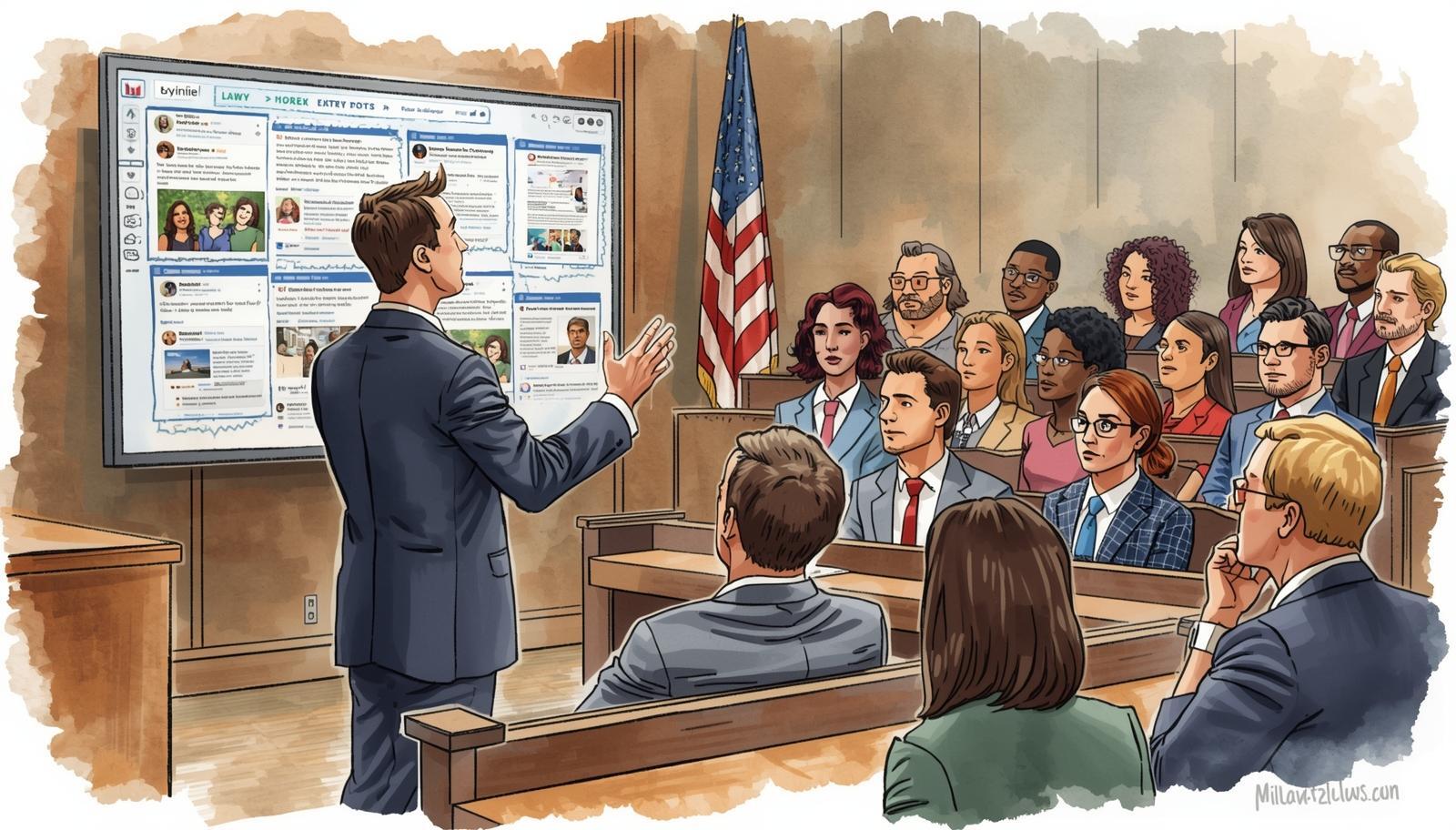
Trial Lawyers Win With Stories, Not Spreadsheets
Every great trial lawyer knows the truth: cases are won with stories, not spreadsheets. Jurors don’t connect with diagnoses, demand letters, or timelines, they connect with people. And yet, many plaintiff firms still overlook the most authentic, time-stamped, visual record of their clients’ lives: social media.
The Most Honest “Before” Picture You’ll Ever Have
Long before a date of loss, clients were quietly documenting who they were. Photos, videos, and posts show how they spent their time, how they worked, what they enjoyed, and who depended on them. This pre-date-of-loss content establishes a baseline no retained expert or scripted testimony can fully recreate.
The Power of the Before-and-After
After an injury, post-date-of-loss social media, when reviewed thoughtfully and in context, can show disruption, loss, adaptation, and credibility. The contrast between “before” and “after” often tells a clearer, more human story than medical records alone ever could.
Why Most Firms Still Miss This Opportunity
So why aren’t more firms using this visual history proactively? Time constraints. Discovery concerns. And the outdated assumption that social media is only a risk to manage, not a tool to use. Meanwhile, defense counsel already understands its power and is collecting it early.
From Risk Management to Case Value
Forward-thinking plaintiff attorneys are shifting their approach. By reviewing social media early, with client permission and organized reporting, firms avoid surprises and strengthen case narratives. What was once viewed solely as a liability becomes a storytelling asset that supports demand packages, settlement posture, and trial themes.
A New Standard of Care
According to ABA Rule 1.1, reviewing social media is no longer optional.Yet it’s the most underused tool for telling your client’s real story.
Curious what this could look like in your practice?
Book a brief intro call and see how proactive client social media review can protect your files and elevate your case strategy.
Frequently Asked Questions about Social Media as Case Evidence
1. Isn’t reviewing a client’s social media too risky for plaintiff firms?
When handled informally or late in the case, yes. When reviewed early, it becomes a way to reduce risk. Early review helps firms identify potential issues so they can be discussed with the client before defense counsel surprises the client at deposition or trial.
2. How is this different from defense counsel digging through social media?
Defense counsel looks for contradictory social content to reduce settlement value or as a tool to impeach a client at trial. Plaintiff firms that review social media early are looking to understand their client’s real story, protect credibility, and shape a consistent narrative supported by visual history rather than reacting after damage is done.
3. Does social media actually help increase case value?
It can. Pre-date-of-loss photos and posts often establish lifestyle, work capacity, relationships, and daily activities in ways medical records cannot. When used thoughtfully, this material supports damages narratives and strengthens settlement posture. At trial, jury members connect with that human experience that visual imagery and videos can bring to life.
4. Won’t this take too much time for already busy staff?
It does when firms rely on manual searches or scramble reactively for last-minute reviews. Private Footprint is a service designed to remove that burden by organizing client social media content from multiple social platforms in a chronologically organized firm dashboard. Instead of staff spending hours chasing posts across platforms, the review becomes structured, predictable, and fits seamlessly into a firm’s existing workflows.
5. Is reviewing social media now part of an attorney’s professional responsibility?
Yes, ABA Model Rule 1.1 (Competence) requires attorneys to understand how to use and evaluate social media as part of legal strategy, specifically due to the 2012 amendment of Comment 8, which mandates that lawyers keep abreast of the “benefits and risks associated with relevant technology”.
This duty extends beyond mere technical proficiency to include understanding the legal, evidentiary, and ethical implications of social media, with many state jurisdictions adopting similar requirements.